Voice Preservation Methods for Sustaining Clear Commentary in Lengthy Interactive Sessions
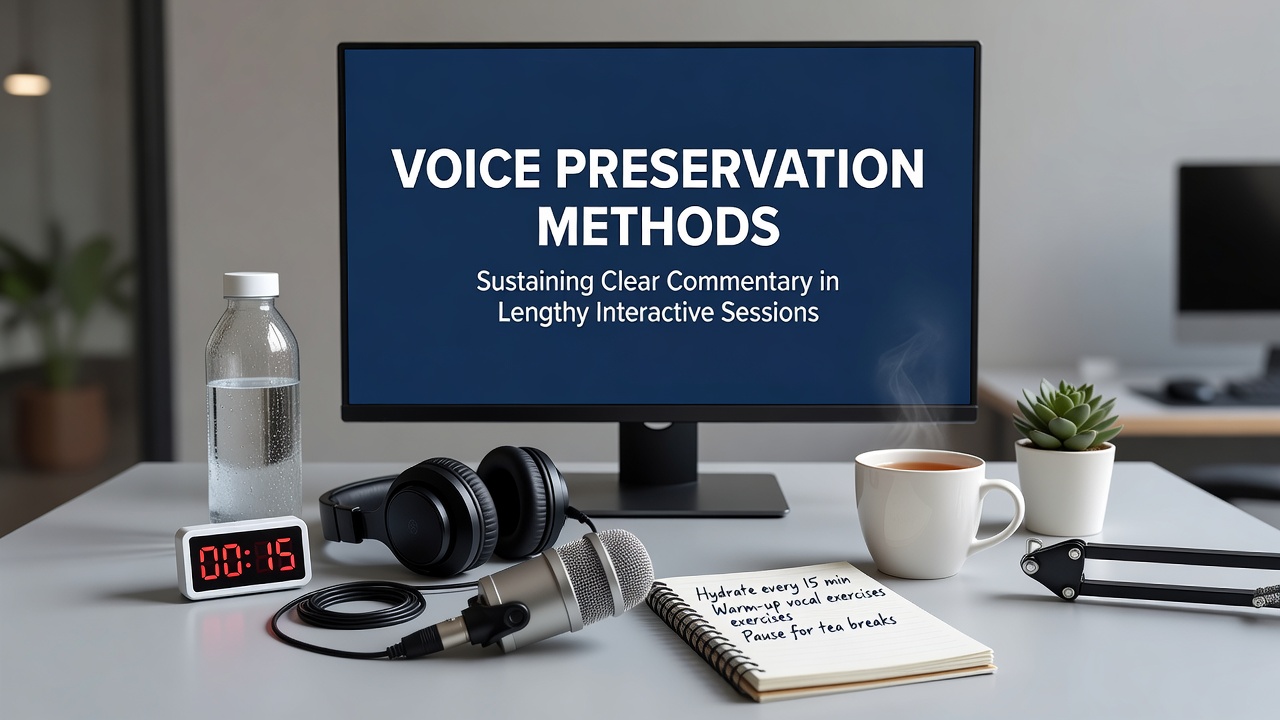
Commentators who deliver live analysis during extended interactive sessions face sustained vocal demands that require systematic preservation strategies, and research indicates these approaches maintain clarity across multi-hour periods when applied consistently. Data from speech pathology studies show that prolonged speaking at varying intensities leads to vocal fold fatigue unless countered by targeted routines involving hydration, posture alignment, and controlled breathing patterns. Observers note that professionals in broadcasting and gaming commentary fields integrate these methods to sustain performance without strain, particularly as session lengths increase in competitive environments.
Hydration Protocols and Dietary Adjustments
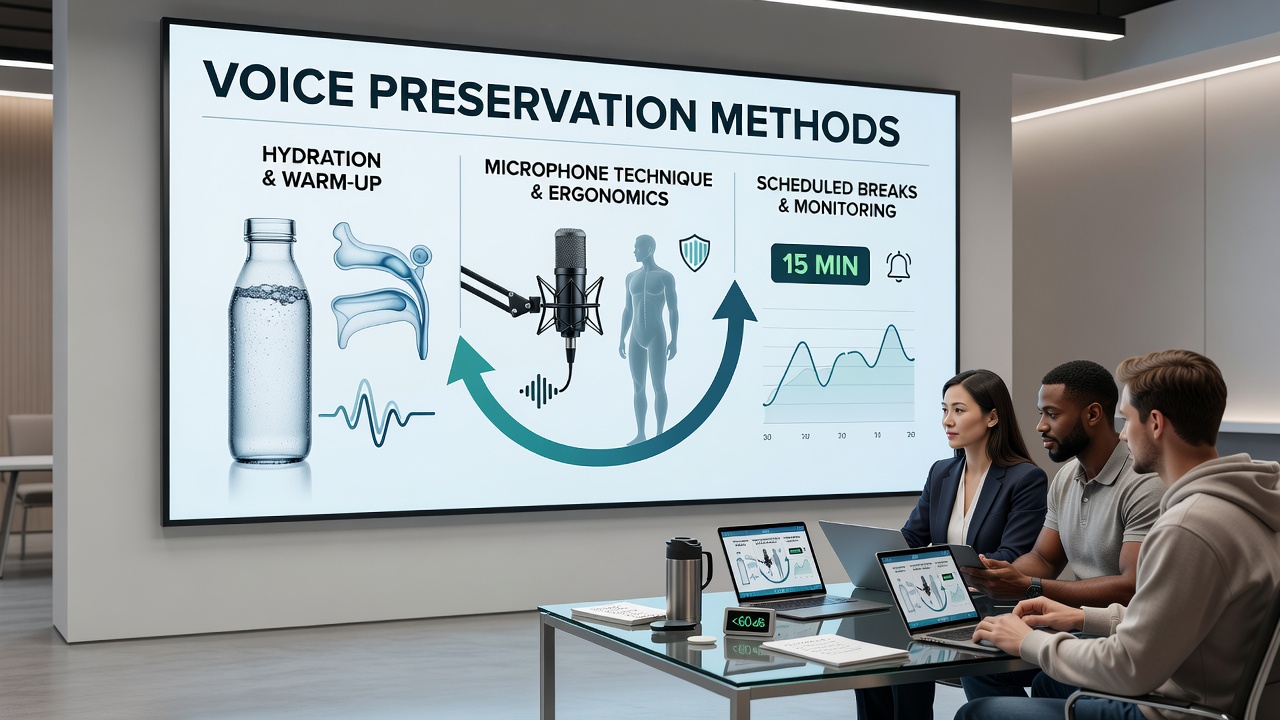
Proper fluid intake forms the foundation of vocal endurance because it maintains mucosal hydration on the vocal folds, and experts at institutions like the National Institute on Deafness and Other Communication Disorders emphasize consuming water at regular intervals rather than large volumes at once. Those who manage lengthy commentary sessions often schedule sips every fifteen minutes while avoiding caffeine and alcohol, which dehydrate tissues and increase friction during speech. Research from Australian health authorities highlights that incorporating electrolyte-balanced beverages supports sustained vocal fold vibration without introducing excess sugars that might trigger mucus production. In July 2026, updated guidelines from similar bodies reinforced the role of room-temperature fluids over cold ones to prevent laryngeal constriction during high-output periods.
Vocal Warm-Up and Cool-Down Sequences
Structured warm-up exercises prepare the larynx for extended use by increasing blood flow and flexibility in the vocal mechanism, and speech-language pathologists recommend sequences of lip trills, gentle sirens, and humming scales performed for five to ten minutes before sessions begin. Data shows that these activities reduce the risk of compensatory tension in neck and shoulder muscles, which otherwise transmit strain to the voice box during rapid commentary shifts. Cool-down routines involving soft sighing and relaxed phonation at session end help restore baseline function, while studies from Canadian research centers demonstrate measurable decreases in perceived effort when such protocols are followed. People who apply these methods report steadier pitch control across successive hours without the hoarseness that accumulates from abrupt starts.
Posture, Breathing, and Environmental Controls
Alignment of the spine and shoulders facilitates efficient diaphragmatic breathing that supports consistent airflow, and ergonomic assessments indicate that commentators who maintain neutral head positions experience less laryngeal elevation during prolonged output. Techniques such as paced inhalation through the nose followed by controlled exhalation coordinate with speech phrasing to distribute vocal load evenly. Environmental factors including humidity levels between 40 and 60 percent prevent excessive drying of the vocal tract, and observers have documented that adding a personal humidifier near the workstation sustains these conditions without relying solely on ambient room settings. Acoustic treatment that minimizes echo reduces the need for raised volume, thereby lowering overall vocal intensity required to project clearly.
Technical Audio Management
Microphone placement at a consistent distance of six to eight inches from the mouth, angled slightly off-axis, captures clear signal while avoiding plosive bursts that stress vocal delivery. Audio processing chains incorporating gentle compression and high-pass filtering preserve natural timbre without forcing the speaker to compensate through increased effort, and industry reports confirm these adjustments maintain intelligibility across variable session dynamics. Software monitoring at moderate levels prevents auditory feedback loops that prompt louder speaking, whereas real-time metering allows commentators to track output peaks and adjust delivery accordingly.
Scheduled Rest Intervals and Recovery Practices
Built-in pauses every forty-five to sixty minutes permit vocal fold recovery through complete silence or soft whispering, and longitudinal data collected by European voice research networks reveals that such micro-breaks reduce cumulative fatigue markers more effectively than continuous operation. During these intervals, neck stretches and jaw relaxation exercises counteract buildup of muscular tension, while silent reading or text-based communication substitutes for spoken interaction. Those who incorporate brief periods of steam inhalation or lozenge use with demulcent properties further support tissue recovery without introducing irritants. Patterns observed in extended broadcast environments show that adherence to these intervals correlates with sustained clarity through the final segments of multi-hour events.
Conclusion
Integration of hydration routines, preparatory exercises, ergonomic positioning, audio optimization, and timed recovery creates a comprehensive framework that sustains vocal performance in demanding commentary contexts. Evidence from multiple health and research sources demonstrates measurable benefits when these elements combine into repeatable daily practice, allowing commentators to maintain projection and precision regardless of session duration. Adoption of such methods continues to expand as interactive formats grow in length and complexity.