Peripheral Calibration Routines That Cut Input Lag During Competitive Title Broadcasts
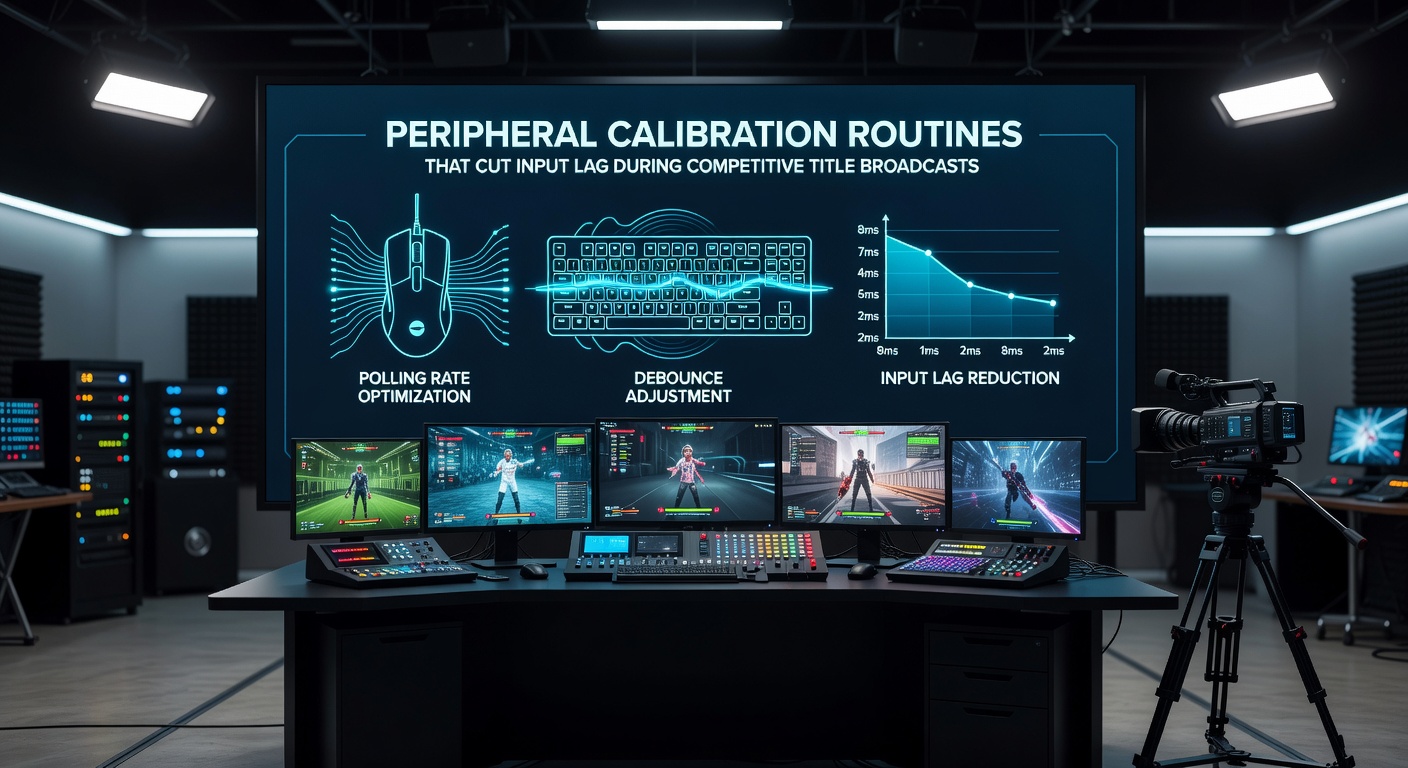
Competitive title broadcasts rely on precise timing where even minor delays between player input and on-screen response can alter match outcomes, and peripheral calibration routines address these issues at the hardware level before signals reach capture cards or encoding software. Observers note that input lag originates from polling rates, debounce timing, firmware processing, and driver overhead in devices such as mice, keyboards, and controllers, while calibration routines adjust these parameters to establish lower latency baselines that persist through the entire broadcast chain.
Research from the Entertainment Software Association indicates that high-polling peripherals have become standard in professional setups since the mid-2010s, yet many operators overlook routine recalibration when environments change, including new firmware updates or venue-specific electromagnetic interference that surfaces during live events. Calibration begins with firmware flashing to the latest manufacturer versions that support raw input modes, followed by software utilities that lock polling rates at 1000Hz or higher for mice and 500Hz for keyboards while disabling unnecessary features like angle snapping or acceleration profiles that add processing steps.
Device-Specific Calibration Sequences
Mice require surface calibration through sensor-specific tools that map lift-off distance and CPI adjustments to the exact mousepad material used in the broadcast booth, and this process takes place before each session because minor dust accumulation or humidity shifts alter tracking consistency. Keyboards undergo debounce recalibration via onboard software that reduces actuation thresholds to 0.1 milliseconds on optical or hall-effect switches, while macro recording functions stay disabled to prevent additional command queuing delays during rapid inputs in titles such as first-person shooters or fighting games.
Controllers follow separate routines where analog stick dead zones receive tightening through calibration wizards that record neutral positions multiple times across temperature cycles, and this step proves essential when wireless models switch to wired connections for broadcasts to eliminate Bluetooth stack latency. Data from university studies on human-computer interaction show that consistent recalibration across sessions reduces average input lag by measurable margins in controlled tests, though results vary with hardware generations and operating system versions.
Integration With Broadcast Workflows
Broadcast teams integrate these routines into pre-show checklists that run parallel to OBS or similar encoding preparations, ensuring peripherals connect directly to the gaming PC rather than through USB hubs that introduce extra packet handling. Observers document cases where teams apply system-level tweaks such as disabling USB selective suspend in power management settings and prioritizing gaming devices in device manager queues, steps that maintain the low-latency path established during initial calibration.
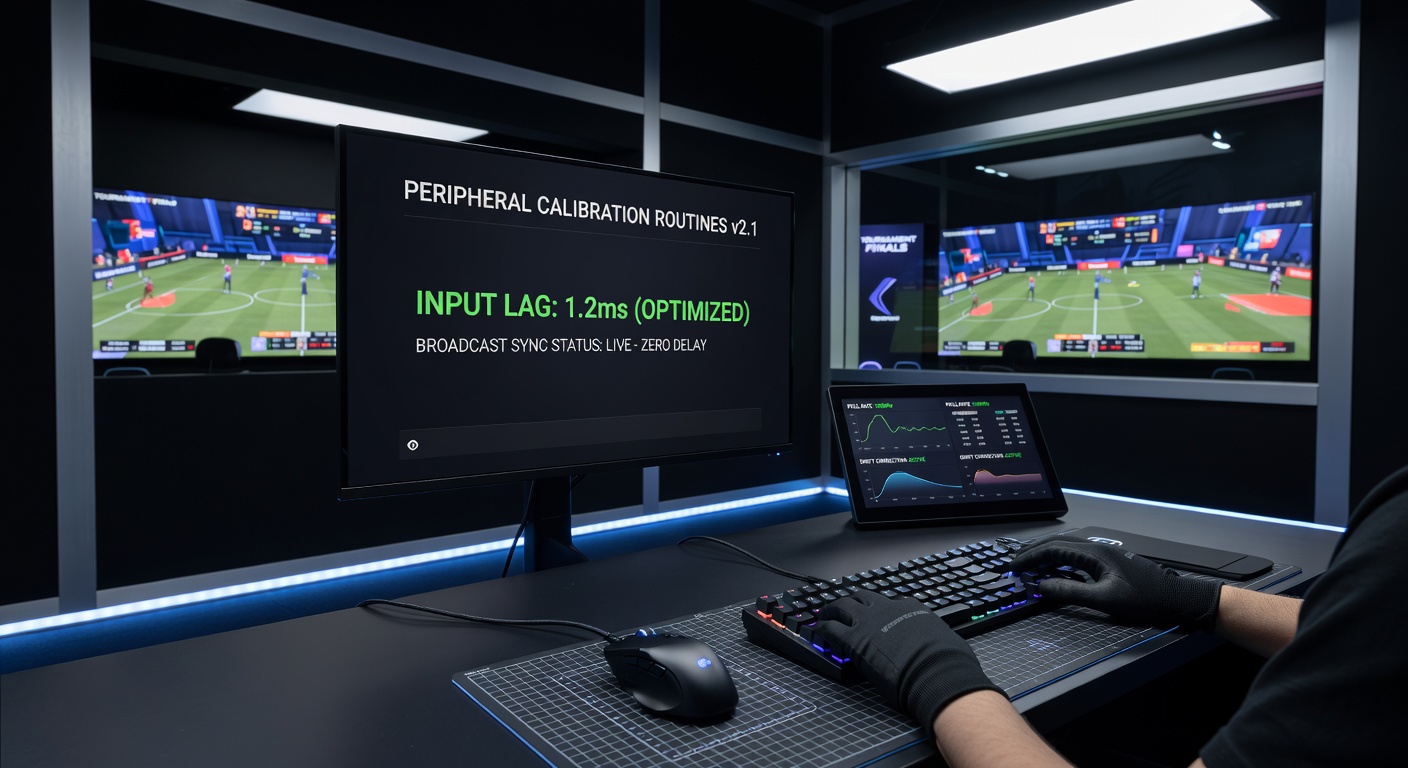
Those who manage multi-station events often schedule staggered calibration windows so that each competitor station receives fresh verification of polling stability right before matches begin, and this timing accounts for potential drift caused by extended uptime or thermal expansion in components. Software overlays that display real-time input lag readouts become part of the monitoring suite, allowing technical directors to confirm that calibration values hold steady once the stream goes live and additional encoding layers activate.
Tools and Measurement Standards
Measurement relies on external devices such as high-speed cameras paired with LED trigger tests or dedicated latency analyzers that record the interval between switch actuation and screen pixel change, and these tools provide objective benchmarks that guide fine-tuning adjustments. Industry reports highlight that European Games Developer Federation members have collaborated on standardized testing protocols for esports hardware, protocols that broadcast crews reference when selecting peripherals for new venue installations scheduled around major events in 2026.
Teams also employ scripting utilities that automate repetitive calibration sequences across multiple devices, reducing setup time while ensuring uniform settings between practice runs and actual broadcasts. Updates released in early 2026 for several popular mouse sensor firmwares introduced improved raw report modes that further minimize onboard processing, and crews incorporate these into existing routines without requiring full hardware replacements.
Case Examples From Recent Events
One documented workflow at a regional qualifier involved recalibrating all keyboards to 8K polling after initial tests revealed packet queuing during peak input sequences, and the adjustment produced stable response times that carried through the full broadcast without requiring mid-event interventions. Another instance saw controller teams using temperature-controlled chambers to simulate booth conditions before final dead-zone settings, a step that prevented drift observed in previous events held in similar venues.
These examples illustrate how calibration routines scale from individual device tweaks to coordinated station management, always with the goal of preserving the lowest possible input path from player hardware to encoded stream output. Figures from ongoing academic monitoring projects continue to track how such practices influence viewer perception of responsiveness in competitive broadcasts across different network conditions.
Conclusion
Peripheral calibration routines form a foundational layer in competitive title broadcast production by targeting hardware-level sources of input lag before they interact with encoding or distribution stages. Teams that maintain structured sequences for mice, keyboards, and controllers achieve measurable consistency across events, supported by measurement tools and emerging firmware standards referenced in industry reports through 2026. This approach keeps performance aligned with the demands of live competitive environments where timing precision remains critical.