Pattern Recognition in Chat Velocity to Trigger Dynamic Scene Changes During Intense Gameplay Moments
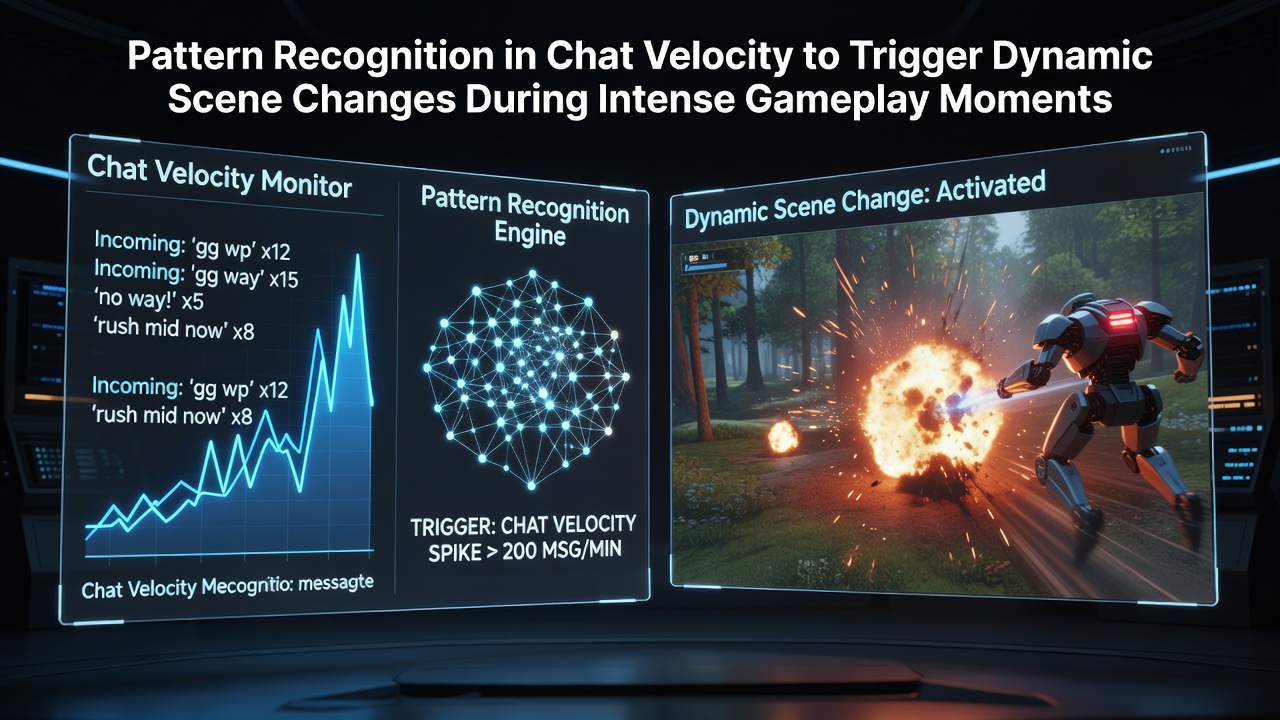
Streamers have begun integrating pattern recognition systems that monitor chat velocity, which refers to the rate and clustering of viewer messages, to automatically adjust scene layouts in broadcasting software during high-stakes gameplay sequences. These tools analyze incoming message frequency against baseline data collected from earlier segments of the same broadcast, then execute predefined transitions such as adding particle overlays or switching camera angles when velocity spikes exceed established thresholds. Research from the Entertainment Software Association indicates that viewer engagement metrics rise measurably when visual changes align with peak interaction periods in action titles.
Core Mechanics of Velocity Detection
Systems track message counts per second across integrated chat platforms, applying algorithms that distinguish between random chatter and coordinated bursts triggered by in-game events like boss encounters or tournament clutches. Data processing occurs locally on the broadcaster's machine to maintain low latency, with rolling windows of five to fifteen seconds used for comparison against historical averages from the current session. When patterns match predefined criteria, such as a sustained increase of 300 percent over the prior minute, the software triggers scene changes without manual intervention from the operator.
Multiple variables factor into the recognition model, including message length distribution, repetition rates of specific emotes, and the ratio of unique users contributing during the spike. Developers calibrate these models using anonymized datasets from prior streams, allowing the system to adapt across different game genres where intensity manifests in distinct chat behaviors. Observers note that first-person shooters produce sharper velocity peaks compared with strategy games, which tend toward steadier climbs.
Implementation in Common Broadcasting Setups
Broadcasters configure these triggers through modular plugins that interface directly with scene collections in tools like OBS Studio, mapping velocity thresholds to specific actions such as enabling animated transitions or layering additional sources. Setup typically begins with a calibration phase where the software records normal chat flow during low-intensity periods, establishing a personalized baseline that accounts for audience size and community habits. Once active, the system operates continuously, logging each detected event for later review in post-stream analytics.
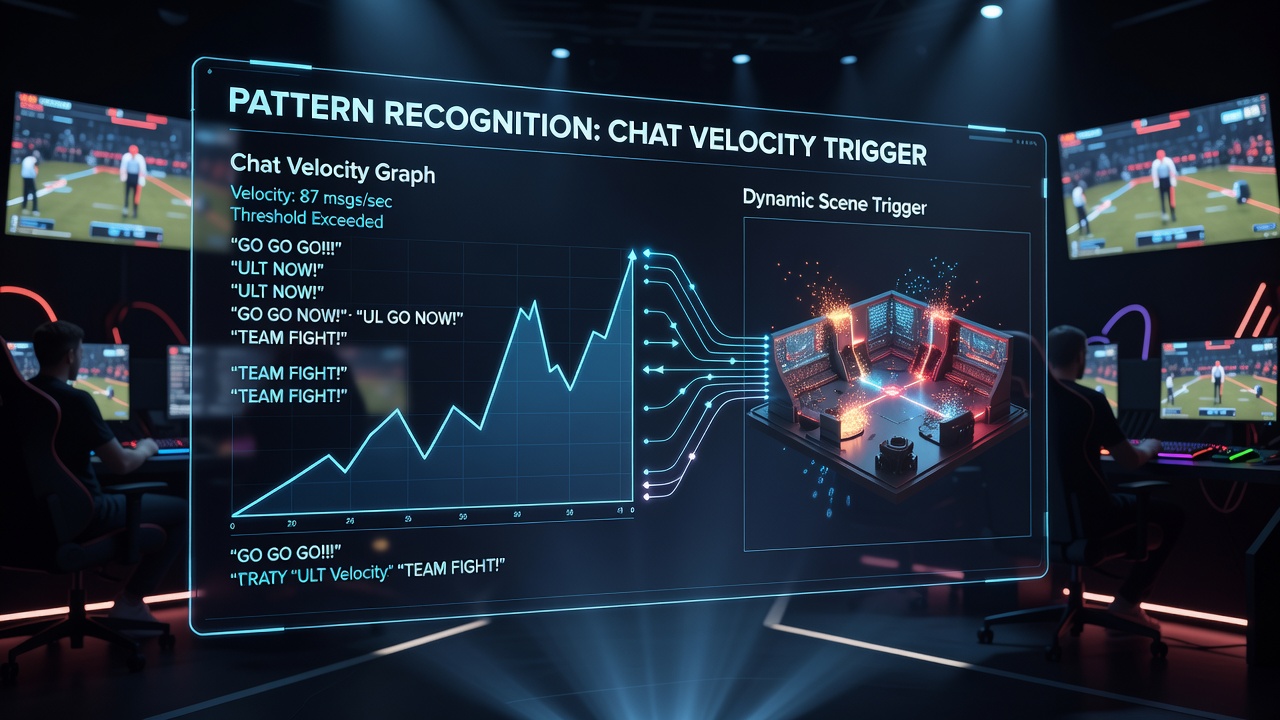
Integration examples include automatic insertion of reaction cams when chat velocity indicates a clutch moment, or rapid cycling through highlight reels when sustained high velocity coincides with victory conditions. Hardware requirements remain modest, relying primarily on CPU cycles for text parsing rather than GPU resources, which keeps the approach accessible for mid-range streaming rigs. In July 2026, several plugin updates introduced machine learning refinements that improved false-positive rejection by cross-referencing velocity data with in-game telemetry where APIs permit such access.
Data Sources and Calibration Practices
Calibration draws from aggregated statistics released by industry groups such as the International Game Developers Association, which track average chat interaction rates across major platforms during live events. These figures help establish initial thresholds that individual users then refine through iterative testing over multiple broadcasts. One documented case involved a broadcaster who adjusted sensitivity settings after three sessions revealed that emote-heavy spikes required separate handling from text-heavy ones to avoid unnecessary scene flips.
Academic studies from institutions including the University of Melbourne have examined similar real-time signal processing techniques in entertainment contexts, confirming that velocity-based triggers can reduce operator workload while preserving viewer attention during extended sessions. The research emphasizes the value of transparent logging so that adjustments remain data-driven rather than arbitrary.
Performance Considerations Across Platforms
Network conditions influence detection accuracy when chat services experience regional latency, prompting some implementations to incorporate buffer mechanisms that smooth minor fluctuations before committing to a scene change. Cross-platform streams that simultaneously target multiple services require separate velocity monitors for each chat feed, with priority rules determining which source activates transitions. Tests conducted in controlled environments demonstrate that properly tuned systems respond within 800 milliseconds of a qualifying spike, aligning closely enough with gameplay timing to feel responsive to viewers.
Resource monitoring shows minimal impact on overall stream stability, with CPU overhead typically under 5 percent on modern processors when handling audiences of several thousand concurrent viewers. Scalability improves through optional cloud-assisted preprocessing offered by certain third-party services, though local-only configurations remain popular for privacy-conscious operators.
Conclusion
Pattern recognition applied to chat velocity provides broadcasters with an automated method for synchronizing visual presentation changes to moments of heightened audience activity during intense gameplay. Continued refinement of detection algorithms, supported by data from established industry and academic sources, supports broader adoption across competitive and casual streaming environments alike.