How Humidity Control in Recording Spaces Affects Equipment Longevity and Signal Stability for Continuous Broadcasting Operations
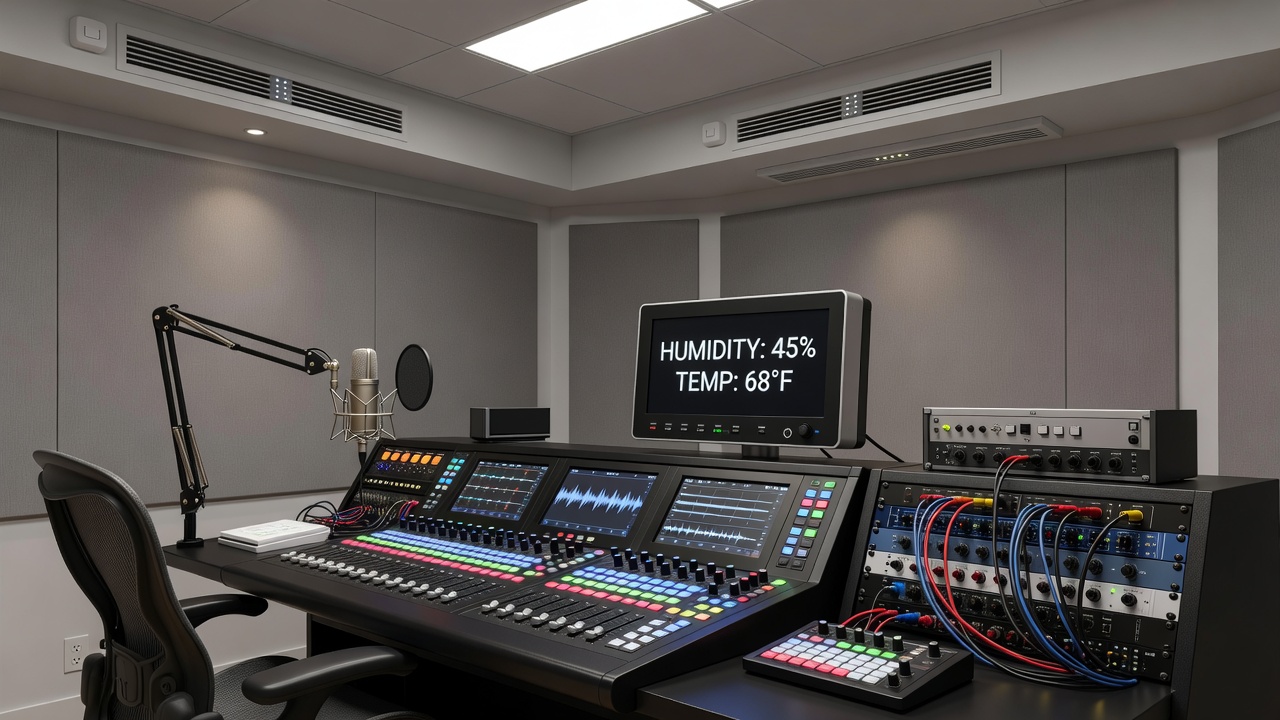
Humidity levels in recording spaces play a direct role in how broadcasting equipment performs over extended periods, and facilities that maintain consistent conditions often see measurable differences in hardware durability along with fewer interruptions during live operations. Data from environmental monitoring programs shows that relative humidity outside the 40 to 60 percent range accelerates wear on sensitive components such as capacitors, circuit boards, and connectors while also creating pathways for signal degradation through moisture-related interference.
Equipment Longevity Under Varying Humidity Conditions
High humidity encourages corrosion on metal surfaces inside mixers, transmitters, and storage devices, and researchers at facilities tracked by the National Institute of Standards and Technology have documented faster oxidation rates when moisture remains above 65 percent for weeks at a time. Condensation forms during rapid temperature drops, leaving water droplets that short-circuit boards or promote mold growth on insulation materials, both of which shorten operational life spans for continuous-use systems.
Low humidity creates its own set of problems because static electricity builds up more readily and discharges can damage semiconductors or erase data on solid-state drives. Observers note that studios running dehumidification systems paired with precise HVAC controls report replacement intervals for audio interfaces and video encoders that stretch 30 to 40 percent longer than those in unregulated rooms, according to maintenance logs compiled across multiple North American broadcast sites.
Signal Stability and Moisture-Related Interference
Moisture in the air alters electrical resistance in cables and connectors, which introduces noise into analog and digital pathways during long-duration transmissions. Studies conducted by European research consortia found that humidity fluctuations above 70 percent correlate with increased bit-error rates in digital audio streams and occasional dropouts in video feeds when equipment runs without interruption for more than eight hours.
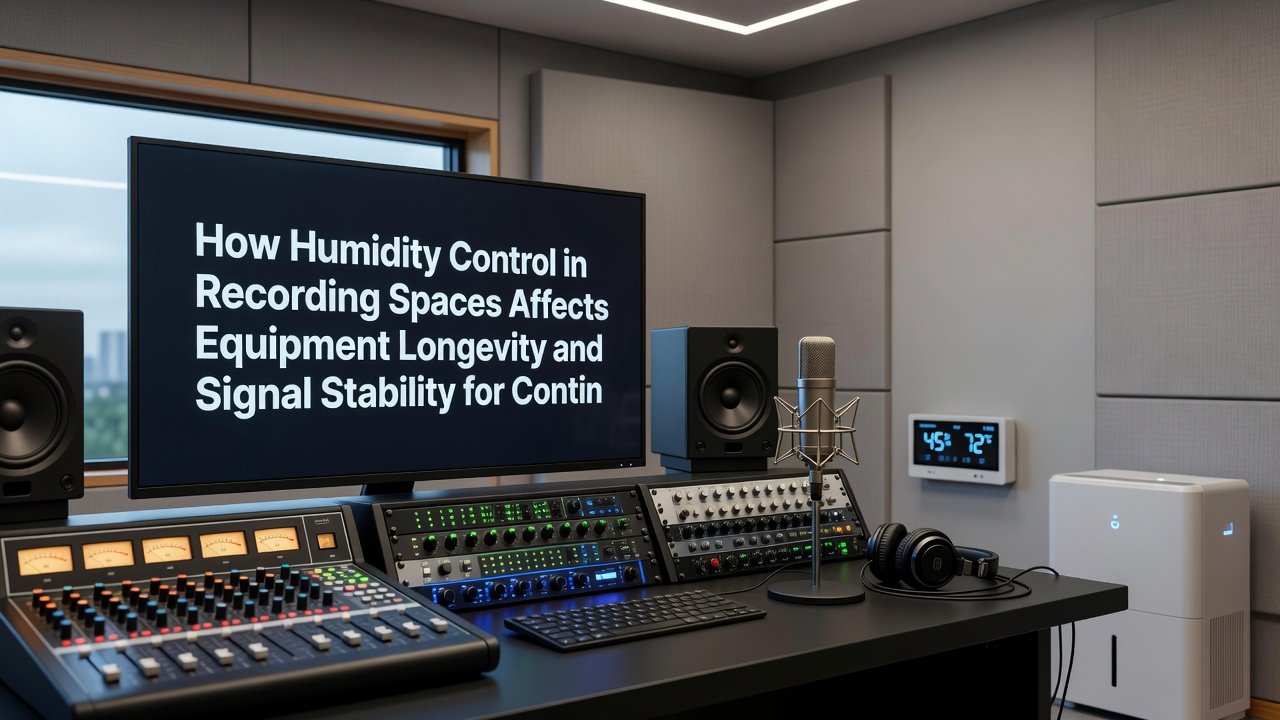
Facilities that install sensors linked to automated ventilation adjust airflow before condensation thresholds are reached, and this proactive approach reduces the frequency of signal artifacts that appear during peak transmission windows. In June 2026 several regional broadcasters plan to integrate new sensor arrays that feed real-time humidity data into central monitoring dashboards, allowing technicians to respond within minutes rather than after performance issues surface.
Control Strategies Used in Professional Environments
Modern recording spaces rely on integrated climate systems that combine dehumidifiers, humidifiers, and air circulation units to keep conditions within narrow tolerances. These setups often include redundant sensors placed at multiple heights and locations because moisture gradients can develop near equipment racks even when overall room readings appear stable.
Maintenance teams follow scheduled calibration routines for these sensors, and records from Canadian broadcast operations indicate that quarterly checks prevent drift that would otherwise allow humidity to stray outside target ranges for days. Desiccant packs placed inside equipment housings provide an additional layer of protection during seasonal transitions when external weather patterns shift rapidly.
Monitoring Data and Long-Term Outcomes
Continuous logging of humidity alongside equipment performance metrics reveals patterns that help predict failures before they occur. One multi-site study coordinated by university engineering departments tracked over 200 pieces of broadcast hardware for 18 months and identified a clear threshold effect where rooms averaging 55 percent relative humidity experienced the lowest rates of both component replacement and transmission errors.
Operators who review these logs monthly adjust setpoints based on seasonal changes and equipment load, which keeps conditions optimal without excessive energy use. The same data sets show that signal stability improves when temperature and humidity remain synchronized because thermal expansion and contraction stay minimal, reducing stress on solder joints and cable terminations.
Conclusion
Facilities that treat humidity as a controllable variable rather than an afterthought achieve longer hardware service intervals and steadier signal quality during nonstop broadcasting schedules. Ongoing sensor improvements scheduled for rollout in 2026 will likely refine these controls further by providing earlier alerts and tighter regulation across entire production campuses.