Harnessing API Integrations for Automated Sponsorship Placements During Peak Viewing Windows
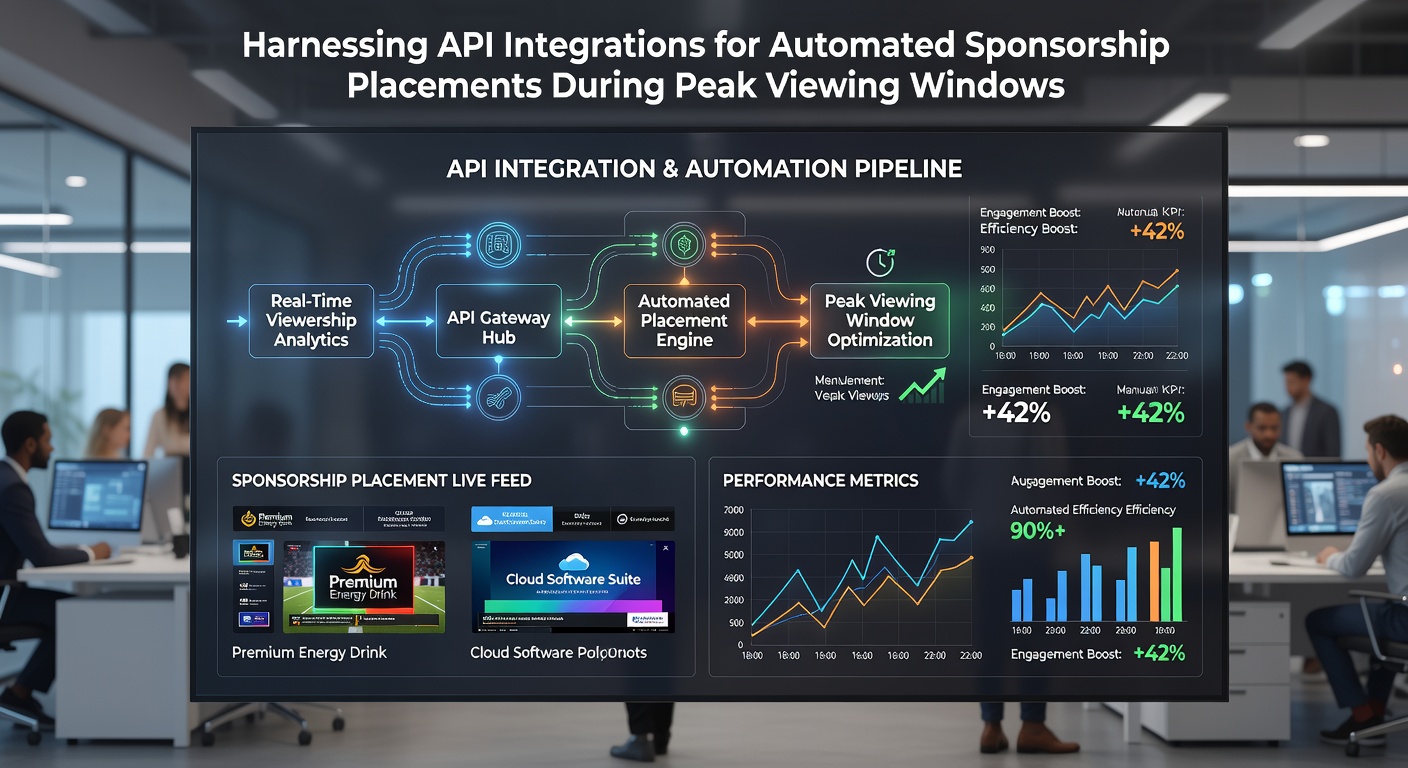
Streaming platforms rely on precise timing to match sponsorship messages with audience attention, and API integrations now handle much of that coordination without manual intervention. Developers connect content management systems to advertising networks through secure endpoints, allowing sponsorship overlays, mentions, and product placements to trigger automatically when viewer counts rise above defined thresholds. These connections pull data from analytics services that track concurrent users, chat activity, and regional time zones to identify peak windows such as evening hours on weekdays or weekend afternoons.
Defining Peak Viewing Windows with Data Sources
Peak periods emerge when multiple factors align, including scheduled events, time-zone overlaps, and content genre popularity. Broadcasters access public viewership reports from organizations like the Interactive Advertising Bureau to calibrate their own thresholds, while platform APIs supply granular metrics updated every few seconds. Researchers note that integration scripts often reference historical datasets to predict surges, adjusting sponsorship frequency so messages appear when engagement metrics climb rather than during lulls.
Core Components of Sponsorship API Workflows
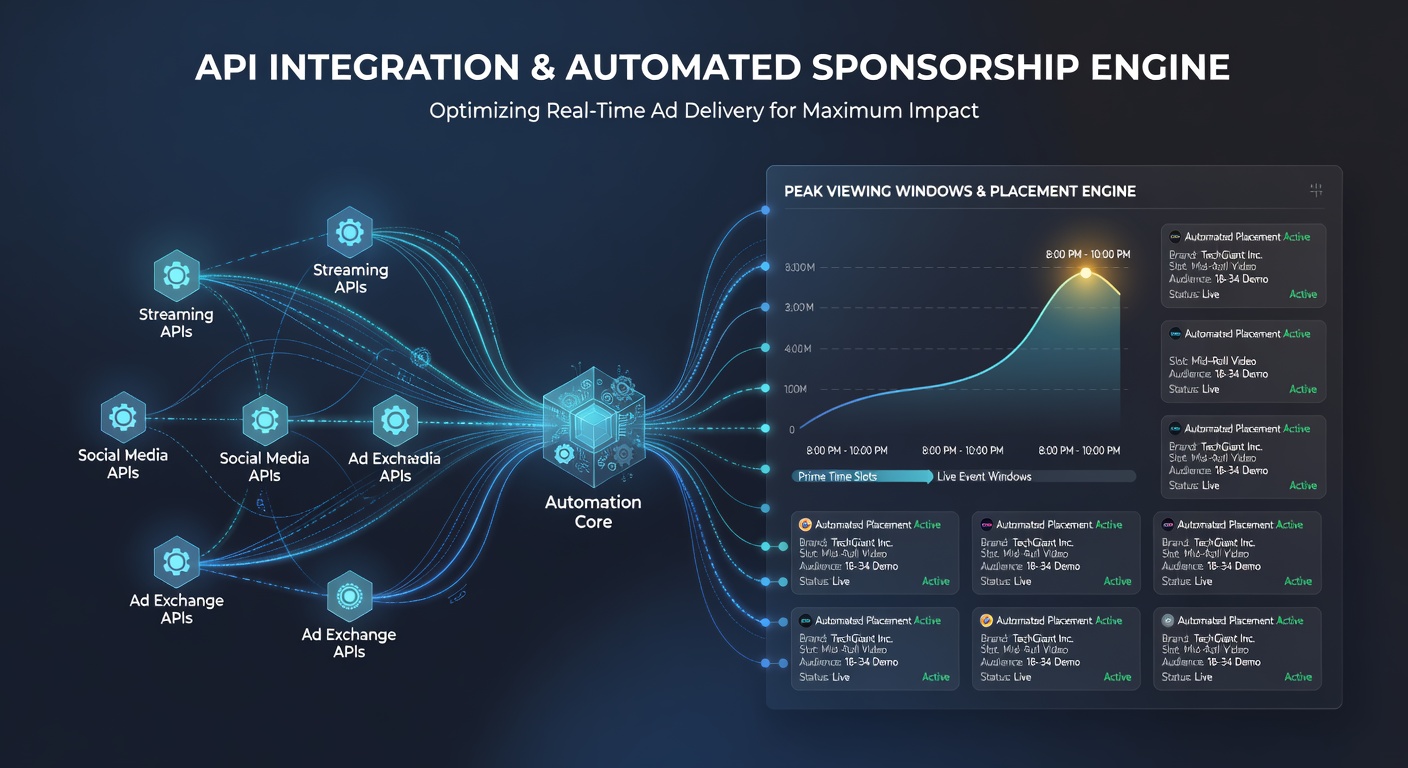
Three primary elements form most automated setups: an analytics API that streams live audience data, a sponsorship inventory API that lists available placements and creative assets, and a scheduling API that publishes timed triggers back into the broadcast software. When viewer numbers cross a set level, the workflow activates a placement request, selects an appropriate sponsor based on preloaded rules, and renders the asset through the streaming encoder. This loop operates continuously, logging each activation for later compliance review.
Integration Patterns Observed Across Platforms
Many production teams route these calls through middleware that normalizes responses from different providers. One common pattern uses webhook subscriptions so the analytics service pushes notifications instead of requiring constant polling, which reduces latency during rapid audience growth. Another pattern batches placement decisions every thirty seconds to avoid overwhelming sponsor servers when traffic spikes. Observers note that teams testing these patterns in controlled environments often measure response times under two hundred milliseconds before deploying them to live channels.
Handling Regional Regulations and Compliance
Automated systems must respect advertising disclosure rules that vary by jurisdiction. Scripts incorporate checks against regulatory databases, such as those maintained by the Australian Communications and Media Authority, to ensure required disclaimers accompany placements. When an integration detects viewers in multiple regions, it selects or modifies creatives accordingly, logging the decision for audit trails. This approach keeps placements compliant while maintaining speed during short peak windows.
Technical Implementation Steps
Developers begin by registering application credentials with each service provider, then map data fields between analytics outputs and sponsorship inputs. Authentication typically uses OAuth 2.0 tokens refreshed on a schedule to maintain secure sessions. Once endpoints connect, teams define rule sets in configuration files that specify triggers such as minimum concurrent viewers, maximum placement duration, and sponsor priority lists. Testing occurs first in staging environments that simulate audience curves drawn from historical logs, after which successful configurations move to production channels.
Monitoring and Adjustment Mechanisms
Live dashboards display placement success rates alongside audience retention figures, allowing operators to pause or modify rules mid-stream if metrics deviate from expectations. Error-handling routines catch failed API responses and queue retries or fall back to static placements. In May 2026, several major tournaments reported using enhanced logging that captured every API call timestamp, helping teams refine prediction models for future events.
Case Examples from Current Deployments
One esports organizer integrated sponsorship APIs with its tournament platform to place partner logos during bracket resets when viewership historically climbs. The system pulled real-time bracket data and viewer counts, triggering placements only when both conditions met defined criteria. Another production group handling variety streams used chat sentiment APIs alongside audience metrics to time humorous sponsor reads during high-engagement segments. These deployments demonstrate how rule-based automation scales across different content formats without requiring constant human oversight.
Future Directions in API-Driven Sponsorship
Continued refinement of machine-learning models that forecast peak windows from early stream signals promises further efficiency gains. Partnerships between platform providers and advertising networks continue to standardize data schemas, reducing integration friction. Those tracking industry reports from research institutions note rising interest in cross-platform APIs that allow a single sponsorship campaign to activate across multiple streaming services during synchronized global events.
Conclusion
API integrations now coordinate sponsorship placements with audience behavior at a level of precision that manual processes cannot match. By connecting analytics, inventory, and scheduling systems, broadcasters maintain consistent delivery during peak windows while meeting regional compliance standards. As these connections mature, the underlying data flows and rule engines will determine how sponsorship appears within live streams across coming seasons.