Fine-Tuning Resolution Scaling Parameters for Optimal Bandwidth Usage in Cross-Platform Live Dispatches
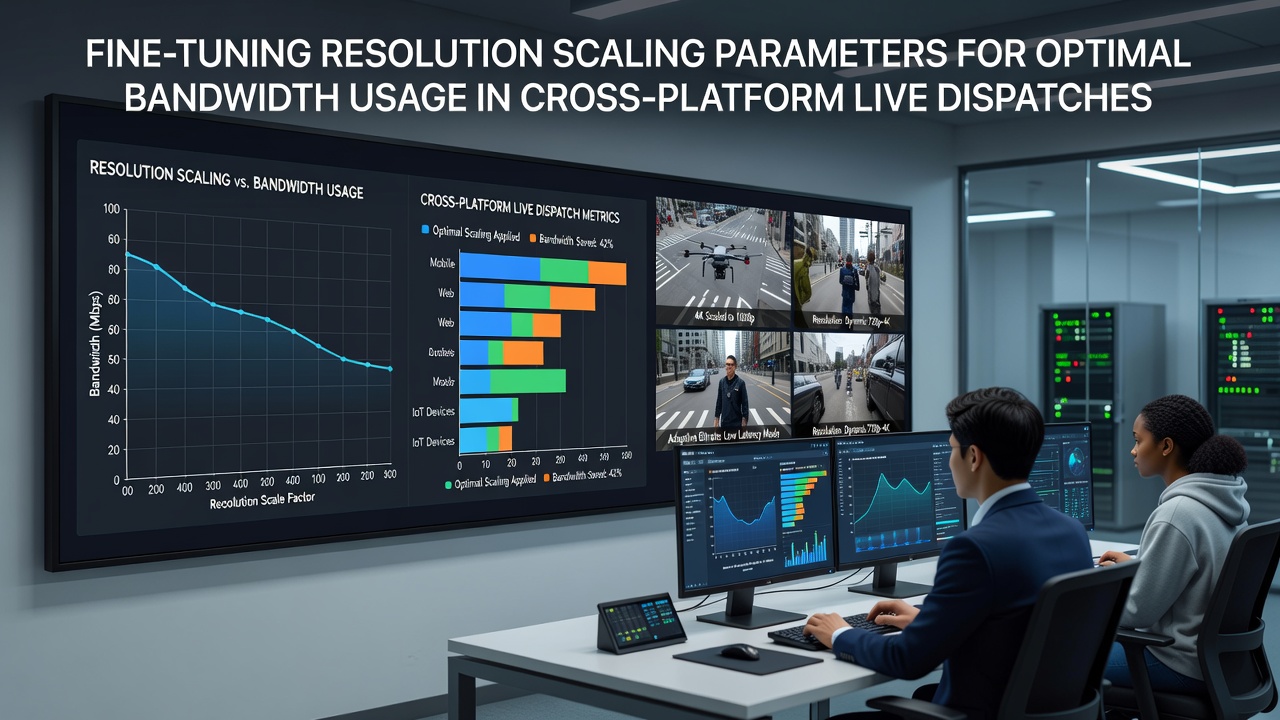
Resolution scaling parameters play a central role in managing data rates during live video transmissions that span multiple device types and network environments. Technicians adjust input resolutions, output targets, and interpolation methods to match available throughput while preserving visual clarity across desktop viewers, mobile apps, and set-top boxes. Data from industry monitoring shows that precise control over these variables reduces peak bandwidth consumption by measurable percentages in simultaneous broadcasts.
Core Parameters in Scaling Workflows
Engineers typically modify source resolution before encoding, apply scaling filters such as Lanczos or bilinear interpolation, and set target output dimensions that align with each platform's decoder capabilities. Bitrate ladders then map these scaled frames to variable quality tiers so that adaptive streaming clients can switch segments without rebuffering. Observers note that changes in scaling ratio directly influence quantization parameters inside codecs like H.264 or AV1, which in turn alters the final payload size sent over content delivery networks.
Cross-platform compatibility requires separate profiles for each endpoint category. A 1080p feed destined for smart televisions may undergo downscaling to 720p for tablet users while a lower tier serves phones at 480p. Researchers at technical conferences have documented how mismatched scaling introduces artifacts that consume extra bits without improving perceived quality, prompting teams to test parameter sets on representative hardware before wide deployment.
Bandwidth Measurements Across Networks
Real-time telemetry collected during multi-region events reveals that optimized scaling cuts average bitrate requirements from 8 Mbps to roughly 5.5 Mbps per stream when moving from static high-resolution output to dynamic parameter adjustment. These savings compound when dozens of concurrent dispatches share the same uplink, freeing capacity for additional audio tracks or metadata layers. Figures published by the Canadian Radio-television and Telecommunications Commission indicate similar patterns in North American trials conducted through mid-2025.
Implementation Steps for Live Operations
Teams begin by capturing raw footage at the highest sustainable camera resolution, then route frames through a software scaler that applies platform-specific output sizes. Encoding presets receive updated resolution values along with corresponding bitrate caps that prevent overshoot during network congestion. Monitoring dashboards track dropped frames and buffer events so operators can refine scaling factors between segments without interrupting the dispatch.

July 2026 marks the scheduled introduction of updated encoder libraries that include native support for fractional scaling ratios. Early adopters report smoother transitions between quality tiers once these libraries integrate with existing content management systems. The change allows finer control over pixel dimensions, which reduces the abrupt jumps previously observed when switching from 1080p to 720p profiles.
Cross-Platform Testing Protocols
Validation routines run automated scripts that simulate variable latency and packet loss on each target device class. Metrics collected during these tests include startup delay, rebuffering ratio, and mean opinion score derived from viewer panels. Organizations such as the European Telecommunications Standards Institute have published guidelines that recommend repeating tests at different times of day to capture diurnal traffic patterns affecting available bandwidth.
One documented workflow involves locking the vertical resolution while allowing horizontal scaling to adapt to aspect ratio differences across platforms. This approach maintains consistent line counts for text overlays and user interface elements yet trims horizontal pixels to fit narrower mobile viewports. Data gathered from production environments shows this method delivers consistent visual results without requiring separate asset pipelines for every destination.
Conclusion
Resolution scaling parameters remain a practical lever for controlling bandwidth expenditure in cross-platform live dispatches. Systematic adjustment of input dimensions, filter selection, and bitrate mapping produces measurable efficiency gains that scale with audience size. Continued refinement of these settings, especially ahead of the July 2026 library updates, supports reliable delivery across expanding device ecosystems while respecting network constraints reported by regulatory bodies and research groups worldwide.