Cable Organization Methods That Maintain Consistent Performance in Demanding Broadcast Scenarios
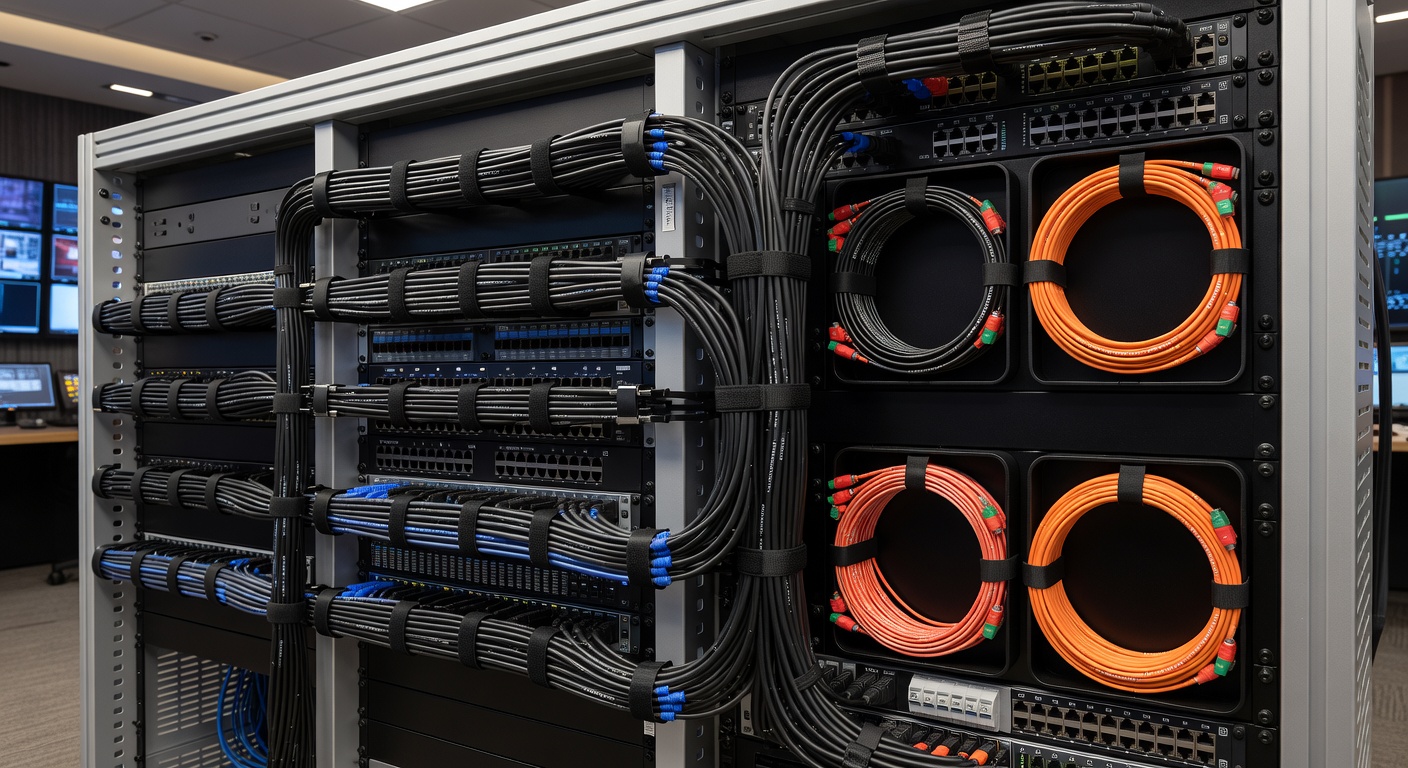
Broadcast environments place heavy demands on cable infrastructure, where signal integrity must hold steady through extended live sessions, high-resolution feeds, and dense equipment arrays. Observers note that disorganized cabling introduces variables like electromagnetic interference, heat buildup, and physical strain that erode performance over time, yet structured organization techniques counteract these factors by establishing clear pathways and protective measures.
Core Principles of Cable Separation
Power cables generate electromagnetic fields that disrupt nearby signal lines, so effective methods keep these categories physically isolated throughout routing paths. Data from the Federal Communications Commission shows that maintaining at least 12 inches of separation between AC power and video or audio cables reduces noise floors in professional setups. Technicians achieve this through dedicated raceways or partitioned conduits that channel each type independently while still allowing access for maintenance. In May 2026, updates to international broadcast standards are expected to emphasize these distances even further for 8K transmission chains.
Bundling Techniques That Preserve Flexibility
Velcro ties and reusable straps replace rigid zip ties in many facilities because they permit incremental adjustments without damaging outer jackets. Groups of similar cables get secured at regular intervals, typically every 12 to 18 inches, to prevent sagging that stresses connectors over long runs. Researchers at the University of Melbourne documented how properly tensioned bundles reduce micro-movements that otherwise degrade contact points in high-traffic control rooms. Color-coded sleeves further assist quick identification during live troubleshooting, and the same study found that such labeling cut mean repair times by measurable margins in simulated outage scenarios.
Routing Strategies for Heat and Interference Control
Cables routed away from heat sources such as power supplies and lighting fixtures maintain lower operating temperatures, which preserves dielectric materials inside. Raised flooring systems or overhead cable trays provide elevated paths that promote airflow while keeping lines clear of foot traffic. When cables must cross power lines, they do so at right angles to minimize inductive coupling, a practice confirmed effective in multiple field reports. Conduits with metallic shielding add another layer of protection in environments where RF noise from wireless microphones or nearby transmitters remains constant.
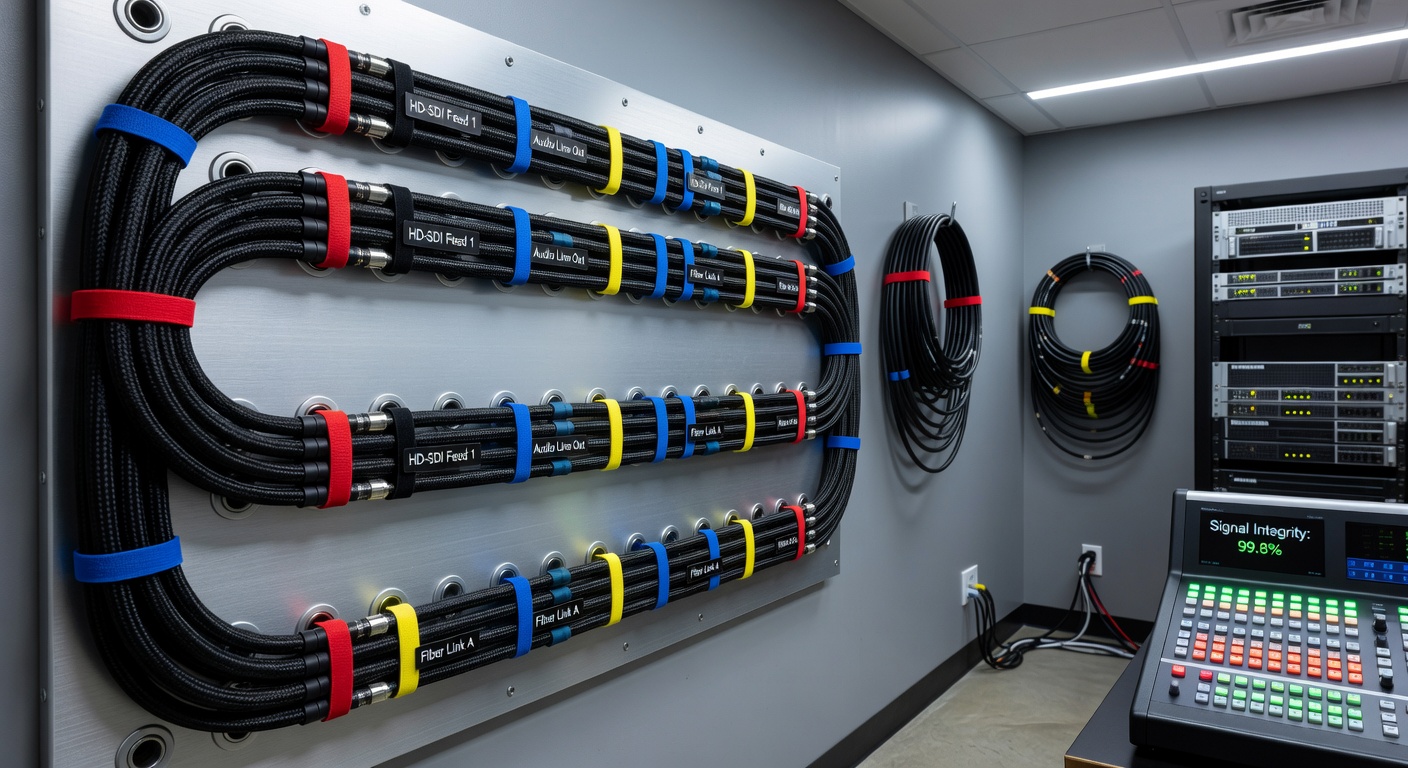
Strain relief at every termination point prevents sharp bends that fracture internal conductors, and flexible grommets or boots distribute force evenly around entry points into equipment racks. Those who've studied broadcast reliability note that these small hardware additions extend connector lifespan significantly when shows run continuously for hours.
Documentation and Testing Protocols
Accurate diagrams and cable schedules allow teams to trace faults without disturbing active runs. Each cable receives a unique identifier at both ends, recorded in digital logs that update after any change. Periodic testing with cable certifiers verifies continuity and shielding effectiveness, catching degradation before it affects on-air quality. Industry organizations such as the European Broadcasting Union recommend quarterly inspections in high-demand facilities, because cumulative wear from repeated setups often appears first as increased bit-error rates rather than outright failure.
Conclusion
Consistent broadcast performance depends on methodical cable organization that addresses separation, support, shielding, and documentation together. When these elements combine, signal paths remain stable across demanding schedules, and equipment downtime stays minimal. Facilities that adopt these approaches see measurable gains in reliability, supported by ongoing data from regulatory bodies and academic research across regions.