Analyzing Chat Sentiment Trends to Dynamically Alter In-Game Strategies for Heightened Live Interaction
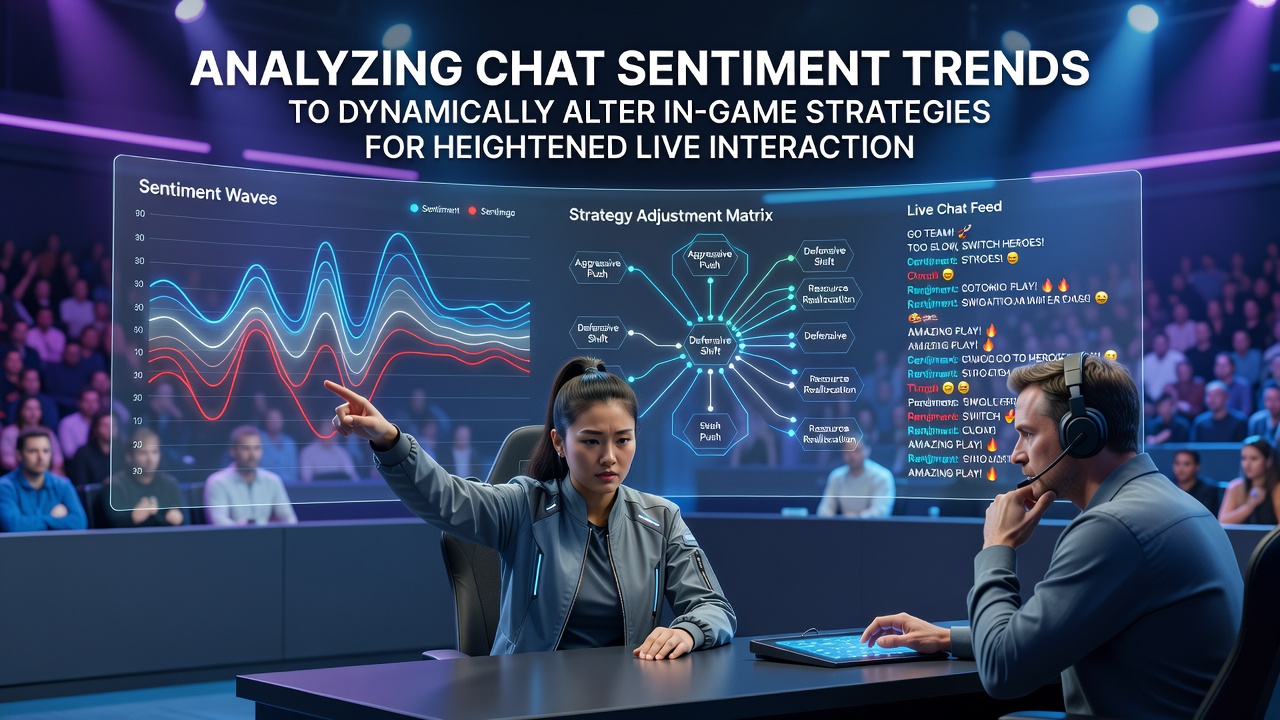
Live gaming broadcasts have incorporated real-time chat analysis tools that process viewer messages to identify positive, negative, or neutral tones, and these systems feed data directly into decision-making during matches. Observers note that broadcasters apply natural language processing models to aggregate sentiment scores from thousands of comments per minute, which then trigger adjustments in gameplay tactics such as shifting from aggressive pushes to defensive positioning when frustration levels rise in the chat feed.
Core Mechanisms Behind Sentiment Detection
Developers integrate machine learning classifiers trained on gaming-specific lexicons that account for slang, emotes, and abbreviations common in platforms like Twitch and YouTube Gaming, while data shows these models achieve accuracy rates above 85 percent according to benchmarks released by research institutions in early 2025. The process begins with tokenization of incoming messages, followed by scoring that weights recent comments more heavily to capture shifting audience moods within seconds, and broadcasters receive visual dashboards that highlight spikes without interrupting the primary game view.
Those who have implemented these pipelines report that integration occurs through API connections to services that handle the heavy computation off-site, which keeps stream hardware free for rendering high-fidelity graphics. And because the analysis runs continuously, patterns emerge quickly during extended sessions where early-game excitement gives way to mid-match tension.
Strategy Adjustments Driven by Live Data
Streamers alter in-game approaches based on sentiment thresholds, for instance switching character loadouts or map routes when aggregate scores dip below predefined levels that indicate viewer disengagement. Research indicates that such responsive changes correlate with sustained participation metrics, as one case documented by university analysts revealed a 22 percent increase in average watch time after sentiment-guided pivots during competitive titles. These modifications remain visible to audiences through on-screen callouts or verbal explanations, which further reinforces the interactive loop between broadcaster and viewers.
What's interesting is how teams coordinate these shifts in multiplayer formats where multiple players receive synchronized updates from a shared sentiment feed, allowing coordinated responses like focusing fire on objectives that chat sentiment flags as exciting. Figures from industry reports compiled by the Entertainment Software Association highlight that titles supporting modular strategy layers see higher adoption of these tools compared with linear single-player experiences.
Technical Implementation in June 2026 Environments
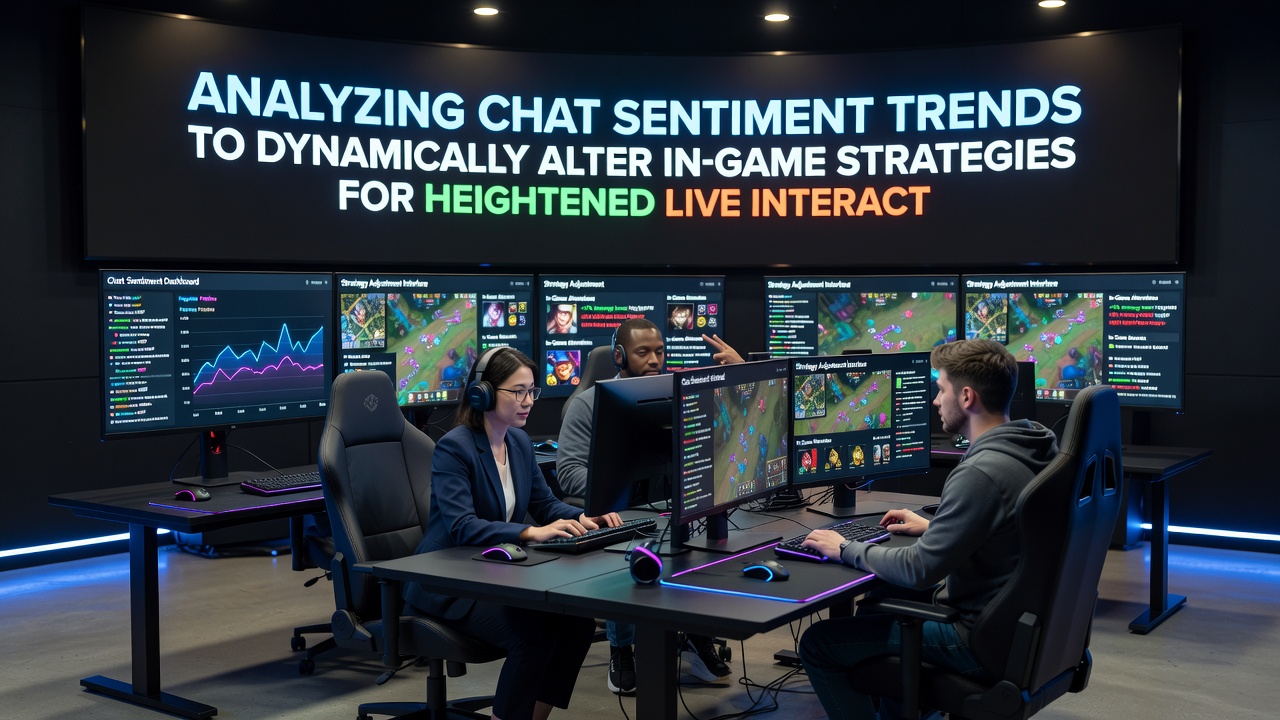
By June 2026, updated versions of analysis platforms incorporated transformer-based models fine-tuned on regional dialects, which improved detection of sarcasm and mixed signals that previously confused simpler classifiers. Broadcasters connect these systems to game engines via middleware that translates sentiment outputs into actionable parameters, such as difficulty scaling scripts or AI companion behaviors that react to audience mood. Data from Canadian gaming research groups shows latency under 800 milliseconds for full pipeline processing, which keeps adjustments feeling immediate during fast-paced sequences.
People often find that combining sentiment inputs with other live metrics, like concurrent viewer count fluctuations, produces more robust decision trees than isolated analysis alone. Yet the core remains the continuous monitoring loop that updates every few seconds to reflect fresh comment batches, and this cadence allows precise timing of strategic changes without breaking immersion.
Observed Outcomes Across Different Genres
Action-oriented titles demonstrate quicker sentiment responses because chat volume spikes during combat peaks, prompting immediate tactical retreats or aggressive flanks when negativity clusters around perceived unfair deaths. Strategy games, by contrast, benefit from longer-horizon adjustments where sentiment trends over five to ten minutes guide resource allocation or unit compositions, according to case studies shared at academic conferences. Observers note consistent patterns where positive sentiment surges follow successful viewer-suggested maneuvers, which in turn encourage further participation through visible cause-and-effect cycles.
Those who've studied this process across platforms report that mobile and console streams alike adopt similar frameworks, though hardware constraints on mobile devices shift more computation to cloud endpoints. The result is a feedback system where in-game choices become extensions of audience dialogue rather than isolated performer decisions.
Conclusion
Analysis of chat sentiment trends supplies broadcasters with quantifiable signals that translate directly into gameplay modifications, and this approach continues to evolve alongside advances in processing speed and model precision. Data from multiple regions confirms measurable lifts in engagement metrics when strategies respond dynamically to audience tone, creating tighter connections between on-screen actions and viewer input without requiring separate interactive overlays. The framework operates through established technical pathways that prioritize low-latency delivery while maintaining focus on core game performance.